.png)
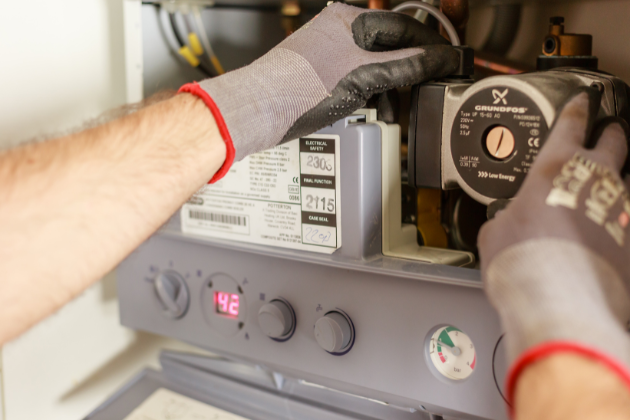
When your boiler plays up, it can be hard to know if a repair will keep it going or if you should start thinking about a replacement. Looking at reliability, safety and comfort rather than cost alone can help you make a confident decision.
Age and reliability of your boiler
Modern boilers are designed to run efficiently for many years, but no appliance lasts forever. As a rough guide, boilers under 10 years old are often still good candidates for repair, especially if they have been serviced regularly.
Once a boiler is over 12 to 15 years old, reliability can dip and parts may wear out more quickly. If you are calling an engineer every winter, it may be more practical to start planning for a replacement rather than repeatedly patching the same ageing system.
Common fault patterns that signal deeper issues
One-off faults can usually be fixed and forgotten about, but repeated problems tell a different story. Make a note of any patterns you notice, as this can really help your engineer diagnose the root cause.
Look out for issues such as frequent resets, regular lockouts or radiators that constantly need bleeding. If your boiler seems fine after a repair but the same symptoms come back within weeks or months, the underlying system might need a more thorough review.
- Pressure loss: If the pressure gauge keeps dropping even after topping up, there may be a leak or failing component.
- Banging or kettling noises: Loud clanking, whooshing or a kettle-like boiling sound can point to limescale, sludge or circulation problems.
- Inconsistent hot water: Water going hot then cold or taps not reaching the set temperature can indicate sensor, valve or heat exchanger issues.
These issues can often be repaired, particularly on a reasonably modern boiler. However, if they occur together on a very old unit, replacement may provide a more reliable long term solution.
Pressure loss, leaks and radiator cold spots
Healthy system pressure is essential for your boiler to work properly. The gauge on the front of the boiler should usually sit around 1 to 1.5 bar when the system is cold, depending on the manufacturer’s instructions.
If you need to top up the pressure more than a few times a year, that points to a leak or failing expansion vessel. Small, visible drips under the boiler, around valves or at radiator joints should never be ignored.
Cold spots on radiators, especially at the bottom, are normally caused by sludge. Powerflushing or cleaning the system can often restore performance, but if radiators and pipework are very old, your engineer may advise more extensive upgrades.
Kettling, banging and other boiler noises
A gentle hum or quiet fan noise is normal, but loud or sudden sounds are not. Kettling is a rumbling or boiling noise inside the boiler, often caused by limescale build up restricting water flow through the heat exchanger.
Banging or clanking noises can indicate air in the system, pump problems, loose components or issues with ignition. While many noisy boilers can be repaired, persistent or worsening sounds on an old appliance can be a sign that parts are wearing out across the system.
Error codes and parts availability
Most modern boilers display an error code on the screen when something is wrong. Your manual will explain what the code refers to, but the same code appearing repeatedly usually means a deeper problem than a simple reset.
On older models, parts can become harder or slower to obtain. If your boiler is out of production and your engineer struggles to source components, that is a strong indicator that planning a replacement is the more practical route.
Hot water and heating consistency
Your boiler should provide stable, comfortable heat without you constantly adjusting settings. If you notice showers running hot and cold, radiators slow to heat up or rooms never quite reaching temperature, something is not right.
Faulty thermostats, diverter valves or circulation problems can often be repaired. However, if your home never feels consistently warm despite multiple callouts, your engineer may discuss whether a new boiler and updated controls would give you more reliable comfort.
Quick homeowner checklist before calling an engineer
A few simple, safe checks can save you time and help your engineer understand what is going on. None of these involve taking the boiler apart or working on gas components.
- Check the system pressure gauge and note the reading when cold and when running.
- Confirm thermostats and timers are set correctly and that the room thermostat is calling for heat.
- Look for any obvious, visible leaks around radiators, pipework and near the boiler.
- Make a note of any error codes or flashing lights on the boiler display.
- Listen for unusual noises and note when they happen, such as at start up or when hot water is used.
If you are ever unsure, stop there and wait for a professional. Working on internal components, gas connections, flues or sealed parts yourself is unsafe and may be illegal if you are not Gas Safe registered.
What a JLN engineer checks during a diagnostic visit
When a JLN Plumbing & Heating Ltd engineer attends, they will first talk through the fault history with you and inspect the boiler and heating controls. They will check pressure, ventilation, flue condition and visible pipework, as well as running the boiler to see how it behaves under normal use.
They may test sensors, pumps, valves and safety devices, and check for signs of sludge or limescale in the system. From there, they can explain whether a targeted repair is likely to restore reliable service, or whether recurrent issues and boiler age suggest that a planned replacement would be more sensible.
How servicing helps prevent breakdowns
Regular servicing keeps your boiler working safely and reduces the chance of a surprise breakdown on a cold day. A proper service includes cleaning key components, checking combustion, testing safety devices and confirming the flue is working correctly.
JLN Plumbing & Heating Ltd offers boiler servicing and repair. Staying on top of annual servicing can often extend the life of your boiler and highlight when it is starting to reach the end of its practical lifespan.
Repair or replace: making the practical choice
Deciding whether to repair or replace comes down to safety, reliability and comfort. A newer boiler with a clear fault is usually worth repairing, especially if parts are readily available and issues are not recurring.
An older boiler that keeps breaking down, struggles to heat your home or has parts that are hard to source is often better replaced in a planned way, rather than waiting for a complete failure in mid winter. A Gas Safe engineer can help you weigh up these factors for your specific situation.
If you are in any doubt about your boiler, or you have noticed any of the warning signs above, contact JLN Plumbing & Heating Ltd on 02476677667 to book a repair or servicing appointment. If a replacement is the most practical option, we can also talk you through suitable boiler replacement choices for your home so you can plan with confidence.







.svg)
.svg)


.svg)
.svg)
